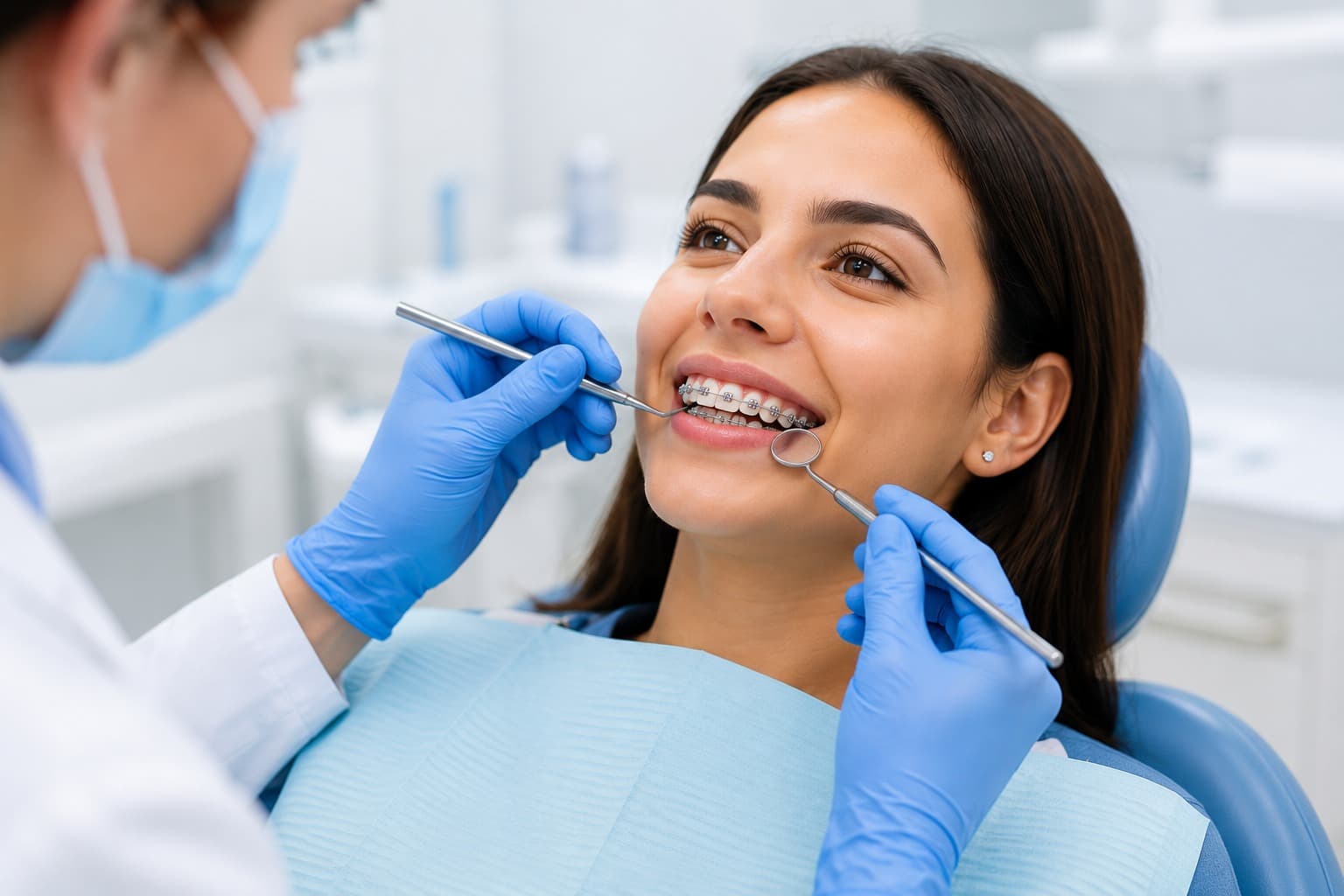
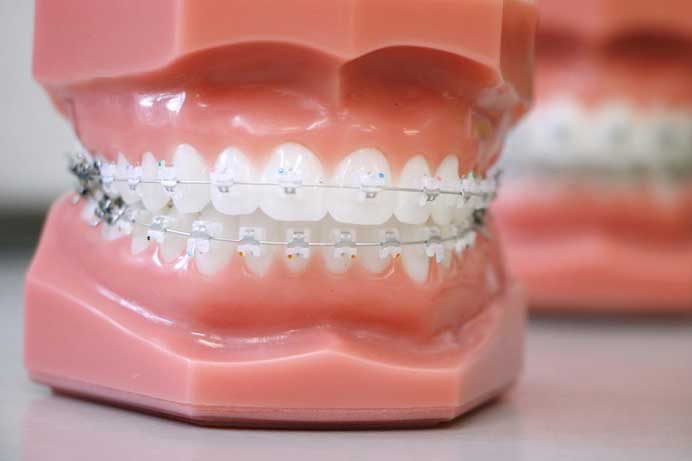
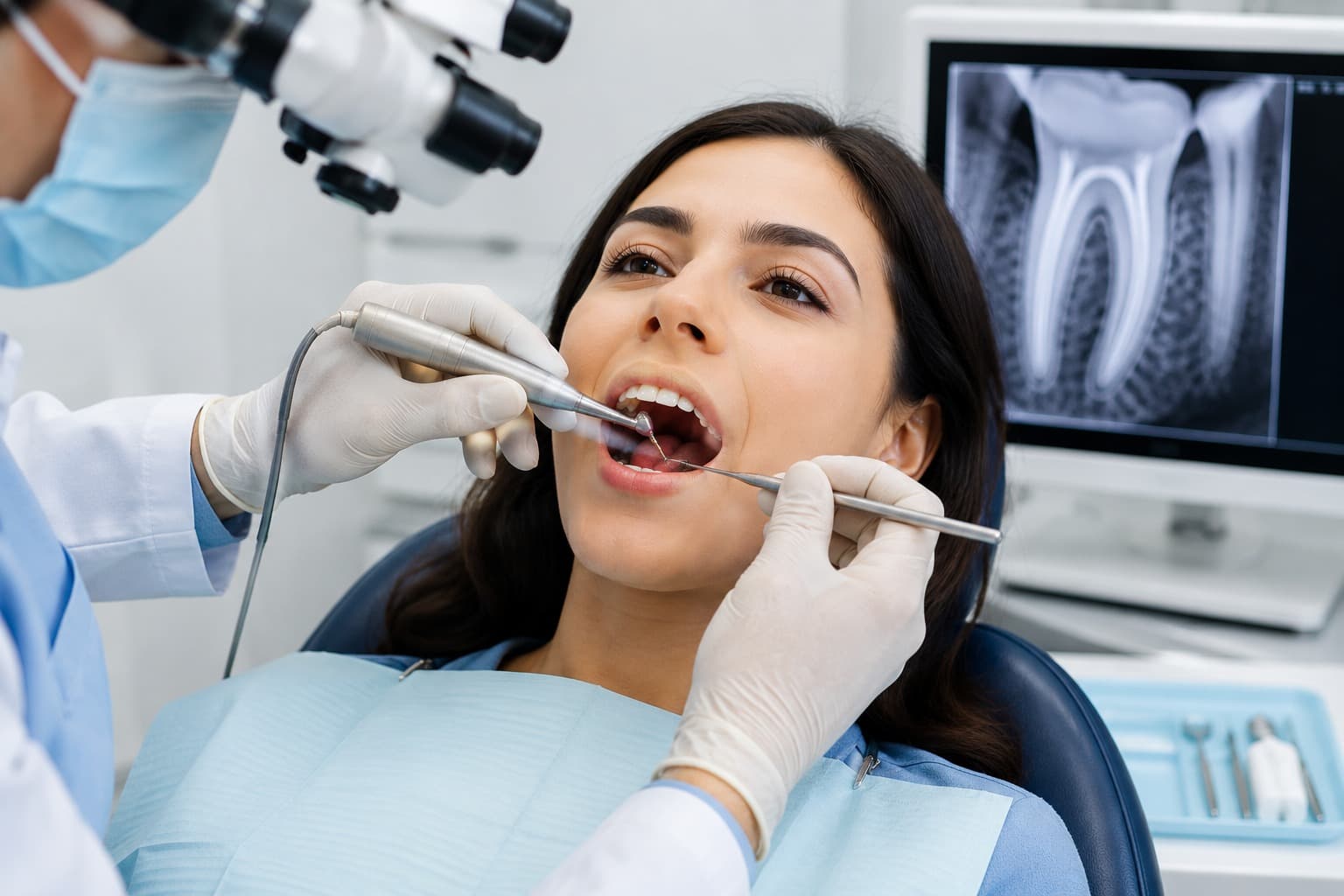
Braces are brackets bonded to the teeth and joined by a wire that moves them gradually into position. Because they are fixed in place they work around the clock and can correct crowding, protrusion and bite problems that removable appliances cannot. We fit both families — normal braces, which hold the wire with an elastic tie, and self-ligating braces, which hold it with a built-in sliding clip — each available in metal or tooth-coloured ceramic. How many appointments you need depends entirely on the case, which is why we give you a plan after the first X-ray rather than a number over the phone.
How the treatment goes
1Assessment and X-rayWe photograph, measure and plan the exact tooth movement needed.
2Bonding the bracketsBrackets are fixed to each tooth and the first wire is placed — no drilling, no injection.
3Adjustment visitsShort visits change or tighten the wire. How many you need depends on the case, not on a fixed schedule.
4Debond and retainerBraces come off and a retainer holds the result permanently.
Types of brace
Every one of these moves teeth the same way. What changes is how the wire is held, how visible the brackets are, and what it costs. Dr. Brindha will show you each before you decide.
Normal braces
An elastic tie holds the wire in each bracket. The proven, most economical option, and the one that handles the heaviest movements.
Metal braces
Stainless steel brackets tied to the wire with small elastic rings, which you can have in colours if you want them. The strongest and most economical option, and the one that handles badly rotated teeth, buried canines and real bite correction. They are visible, which is the trade.
Best for: Children and teenagers, and any case needing heavy movement
Ceramic braces
The same mechanics with tooth-coloured brackets, so they are far less noticeable in conversation or a photograph. Slightly more fragile than metal and a little more expensive, and the clear elastic ties can pick up stain between visits.
Best for: Adults who want fixed braces without them being obvious
Self-ligating braces
A built-in sliding clip holds the wire instead of an elastic tie — less friction, nothing to trap food around, and appointments that are quicker and further apart. Damon is the superior system in this family, and the one we fit.
Self-ligating metal
Metal brackets with a sliding door built into each one. No elastic ties means less friction on the wire, so teeth move with lighter force, and nothing around the bracket for food to catch in — which makes them markedly easier to keep clean.
Best for: Anyone who travels for work, or wants fewer and shorter visits
Least visible option
Self-ligating ceramic
The same clip mechanism in tooth-coloured brackets — the least visible fixed option we fit, and with no elastic ties there is nothing to discolour between appointments. The most expensive of the four, and the one most adults choose when appearance matters.
Best for: Adults who want the discretion of ceramic and the fewest visits
Eating with braces
What to avoid, and what is fine
A bracket pulled off by the wrong mouthful is the most common reason treatment runs longer than we quoted. Nothing here is forever — it is only until the braces come off.
Avoid these
SugarcaneThe single most common cause of a bracket coming off here.
Betel nut and supariHard enough to crack a bracket or bend the wire.
Murukku, thattai, hard chikkiSnaps brackets loose — soften in tea or skip it.
Ice and boiled sweetsBiting either can debond a bracket instantly.
Chewing gum, toffee, sticky halwaPulls the wire out of the bracket slots.
Whole apples, guava, carrot, corn on the cobDo not bite in — cut into pieces and chew at the back.
Nuts, popcorn kernels, hard papadSmall hard pieces are exactly what brackets fail against.
These are all fine
Idli, dosa, upma, pongal
Rice with sambar, rasam or curd
Dal and well-cooked vegetables
Soft chapati, torn rather than bitten
Banana, papaya, and any fruit cut into pieces
Curd, buttermilk, milk and paneer
Egg, fish, and tender chicken off the bone
Ice cream, payasam and kheer
The rule behind the list: nothing hard, nothing sticky, and cut anything you would normally bite into. Chew at the back rather than the front.
Aftercare
After your braces
If front teeth stick out, a clip or brace can correct them — do not delay treatment.
Brush after every meal; food traps easily around brackets.
Avoid very hard or sticky food that can pull a bracket off — see the food list on this page.
With ceramic brackets, cut down on tea, coffee, turmeric-heavy curries and paan: the clear ties stain long before the next visit.
Never miss an adjustment appointment — it lengthens the whole treatment.
Wear the retainer exactly as instructed, or the teeth drift back.
If pain or bleeding gets worse rather than better, call +91 94879 39179 straight away — do not wait for the next appointment.
Questions
Braces — your questions answered
How long do braces take?
Between 8 and 24 months depending on how much movement is needed. Mild crowding can finish inside a year; complex bite corrections take longer. We give you an estimated timeline after the first X-ray rather than a figure over the phone.
Can I pay for braces in instalments?
Yes. Braces can be paid monthly on EMI rather than in one payment, and the schedule is set out in writing before treatment starts. Call +91 94879 39179 and we will explain the options for your case.
What is the right age for braces?
Around 12–14 years is ideal because the adult teeth are through and the jaw is still growing. That said, adults of any age can have braces — we treat patients well into their forties and fifties.
Do braces hurt?
Fitting does not hurt. Teeth feel sore for two or three days after fitting and after each tightening, which soft food and a mild painkiller handle comfortably.
A bracket has come off — what should I do?
Do not panic and do not try to refit it yourself. If it is still threaded on the wire, leave it and call us; if it has come away completely, keep it and bring it in. Ring +91 94879 39179 and we will fit you in — a loose bracket stops that tooth moving, so the longer it waits the longer your treatment runs.
What food do I have to give up with braces?
Nothing forever, but during treatment avoid sugarcane, betel nut, murukku, hard chikki, ice, chewing gum and toffee, and never bite straight into an apple, guava or corn on the cob — cut them up instead. Idli, dosa, rice, dal, curd and soft cooked food are all completely fine. There is a full list on this page.
Metal or ceramic brackets?
They work the same way. Metal is stronger and costs less; ceramic brackets are tooth-coloured and far less visible, which most adults prefer. We will show you both before you decide.
How many appointments will I need?
There is no fixed number — it depends entirely on your case. A mild correction needs far fewer visits than a full bite correction, and self-ligating braces generally need fewer than normal ones. You get a plan with an estimate after the first X-ray.
What is the difference between normal and self-ligating braces?
How the wire is held. Normal braces tie it into each bracket with a small elastic ring; self-ligating brackets have a built-in sliding clip instead. Losing the elastic means less friction, so teeth move under lighter force, appointments are usually quicker and further apart, and there is nothing around the bracket for food to catch in. Damon is the superior self-ligating system and the one we fit.
Vanakkam! I'm the Clear Dental Care assistant. Ask me about treatments, costs, timings or how to get here — or I can put you straight through to the clinic.
General information only — not a diagnosis. Call +91 94879 39179 for advice.